
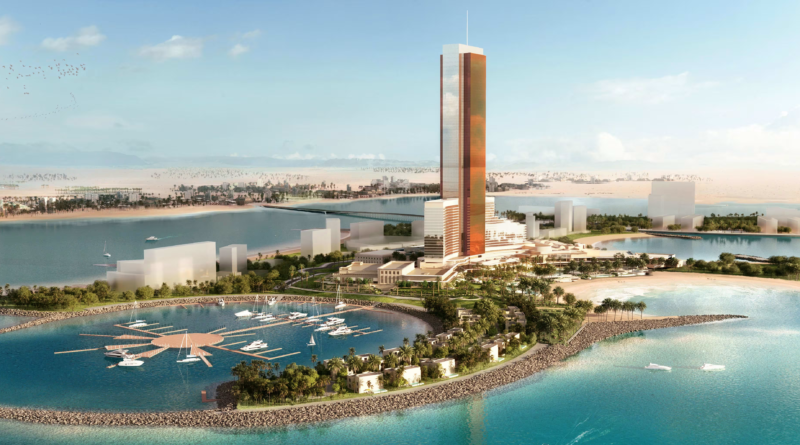
Wynn Al Marjan Island and Other International Projects Watched from London
From our desks in London, the news of Wynn’s planned resort on Al Marjan Island feels like a tremor through the global iGaming landscape, prompting us to look at where else British capital and interest are flowing. This isn’t merely a story about a new casino opening in a distant land; it’s a narrative about the gravitational pull of British finance, the strategic gaze of our domestic industry, and a cultural fascination with the high-stakes worlds of luxury and chance. As the United Kingdom navigates its own complex relationship with gambling, we find ourselves as pivotal observers and participants in a game where the chips are placed from Manila to Marjan, but the bets are often called from the viewing galleries of Mayfair and the City.
The Wynn Al Marjan Island Project: A Game-Changer in the UAE
The announcement of Wynn Resorts’ $3.9 billion integrated resort on Ras Al-Khaimah’s Al Marjan Island sent a clear signal: the map of global luxury gaming is being redrawn. Slated for a 2027 opening, this audacious project represents not just another five-star hotel, but a calculated foray into a region with historically prohibitive views on casino gambling. It is poised to become the first legal casino of its scale in the United Arab Emirates, a development that has sent analysts and investors in London scrambling to reassess the potential of the Gulf.
Breaking New Ground in the Middle East
This venture is a masterclass in navigating complex regulatory and cultural waters. While officially termed an “integrated resort,” the inclusion of a gaming area is unambiguous. Its success hinges on a unique model tailored for the Middle Eastern market, focusing on ultra-luxury, family-friendly entertainment, and world-class dining, with the casino component discreetly integrated. The move required nuanced negotiations and a shift in local policy, demonstrating how international gaming giants can act as catalysts for regulatory evolution. For British observers, it’s a case study in market creation, watched with a mix of professional envy and keen interest in the potential ripple effects across neighbouring regions.
What It Means for the Global Luxury Market
Wynn Al Marjan Island is more than a gaming destination; it’s a statement in the geopolitics of luxury. It aims to capture a significant share of the high-net-worth tourist flow that traditionally splits between Europe, Asia, and Las Vegas. By planting its flag in the UAE, Wynn is betting on the region’s growing status as a global nexus. From a British perspective, steeped in the heritage of Mayfair’s own luxury service and gaming clubs, this project redefines the benchmarks for opulence and scale, challenging established players to elevate their game in an increasingly competitive international arena.
Mayfair’s Quiet Role in Global Casino Finance
While the bright lights of new resorts capture headlines, the engine of global casino expansion often hums quietly in the plush offices of London’s Mayfair district. This epicentre of hedge funds, family offices, and private equity plays a critical, though less visible, role in bankrolling the world’s largest gaming projects. The capital flowing from addresses around Grosvenor Square and Berkeley Street is instrumental in turning architectural renders in the desert or on coastline into steel and glass realities.
Capital Flows from Grosvenor Square
Mayfair’s financiers are adept at structuring complex deals for jurisdictions as diverse as Macau, Las Vegas, and now potentially the UAE. They provide the debt and equity for expansions, acquisitions, and refinancing. This financial hinterland allows British capital to have a stake in global gaming without a single UK-branded casino on the strip. The relationship is symbiotic: international operators gain access to deep, sophisticated pools of capital, while British investors secure exposure to high-growth, albeit high-risk, markets beyond the mature and heavily regulated confines of the UK Gambling Commission’s domain.
The British Investor’s Appetite for Risk
The involvement of Mayfair money speaks to a specific British investor appetite: a calculated chase for yield in alternative asset classes. Casino development, with its long lead times, regulatory hurdles, and cyclical demand, is not for the faint-hearted. Yet, the potential returns from a successful mega-resort are colossal. This risk tolerance, tempered by rigorous financial modelling and geopolitical analysis, is a key export from London’s financial scene. It underscores a reality where the British influence on global gambling is as much about balance sheets as it is about blackjack tables.
Beyond the UAE: Other Hotspots on Britain’s Radar
The view from London is panoramic. While the UAE development is groundbreaking, British analysts, investors, and operators maintain a watchful eye on several other international frontiers where the future of gaming is being written. The potential shifts in these markets could redirect billions in investment and reshape competitive dynamics worldwide.
Asia’s Evolving Landscape
Asia remains the crucible of gaming growth, but its landscape is shifting. Japan, once the holy grail for integrated resort operators, has seen its plans stall amid political and public reluctance. Thailand, however, is now seriously debating legalisation, a move that could open a market of over 70 million people. Meanwhile, the ongoing evolution of Macau and the steady growth of Singapore continue to demand close attention. For UK-based firms and funds, understanding these nuances is critical for strategic positioning and capital allocation.
The Brazilian Gambit
Across the Atlantic, Brazil represents perhaps the largest untapped regulated market potential. After years of stops and starts, the country’s move towards a federal regulatory framework for sports betting and potentially casinos is being closely monitored from London. The scale of the opportunity—a nation of over 200 million with a passionate sporting culture—is immense. British iGaming companies, with their deep expertise in regulated online markets, are particularly well-placed to enter, provided the regulatory environment meets international standards of integrity and consumer protection.
The UK iGaming Industry’s International Play
This global scrutiny isn’t passive. The UK’s own iGaming titans are actively expanding their footprints, competing head-to-head with American giants like Wynn and MGM on the world stage. Companies born from British betting shops and online poker rooms are now formidable multinational corporations, leveraging their UK experience in regulated markets as a blueprint for global conquest.
British Brands on the World Stage
Flutter Entertainment, owner of Paddy Power, Betfair, and FanDuel, and Entain, the powerhouse behind Ladbrokes, Coral, and bwin, are prime examples. Their international strategy involves a mix of organic growth, savvy acquisitions, and joint ventures. For instance:
- Flutter’s acquisition of a majority stake in FanDuel gave it market leadership in the booming US sports betting scene, while its brand portfolio spans dozens of countries.
- Entain operates in over 30 nations, with significant investments in European and Latin American markets, all while maintaining its core UK business under the watchful eye of the UK Gambling Commission.
Regulatory Diplomacy
A key asset for these British brands is their hard-earned experience navigating the stringent compliance and social responsibility demands of the UK Gambling Commission. This becomes a form of “regulatory diplomacy” as they enter new jurisdictions, allowing them to present themselves as responsible, experienced partners to governments seeking to establish safe and well-managed gaming markets. Their global expansion is, in part, an export of a certain British model of regulation—albeit one that is constantly evolving and under domestic scrutiny itself.
Cultural Reflections: What Global Expansion Says About Us
This British fascination with the global casino industry’s frontiers is a mirror held up to our own society. It reflects a deep-seated duality: a nation with a storied history of gentleman’s clubs and betting shops, yet one perpetually uneasy about the social costs of gambling. Our financial sector’s hunger to fund international resorts speaks to a legacy of global risk-taking and capital export. Meanwhile, the success of our homegrown iGaming brands showcases a peculiar British genius for systemising and exporting forms of leisure within frameworks of regulation.
Our editorial gaze on projects like Wynn Al Marjan Island is tinged with both admiration and introspection. We see the allure of unbridled luxury and economic transformation, yet we cannot help but view it through the lens of our own national debates about affordability checks, marketing saturation, and gambling-related harm. This global watch is, therefore, a comparative exercise—a way to measure our own cultural and regulatory choices against those being made in the deserts of the UAE or the legislatures of Brazil.
In the final analysis, the global iGaming landscape is a theatre where the UK plays multiple, critical roles: as financier, as operator, as regulator, and as critic. The chips may be placed on tables in Ras Al-Khaimah, Macau, or Las Vegas, but the capital, the strategic analysis, and the cautious, watchful eye very often originate from the world’s true gaming capital: London.